 AcademyLv 1 · 0AcademyLv 1 · 0
The loop
14 min · up to 70 XP
The six-step rhythm every AI-era developer runs hundreds of times a day.
Sam spent eight years in recruitment. She can read a CV in nine seconds, but she has never written a line of code. Tonight, laptop open at the kitchen table, she's about to. And nobody told her until this week: learning to code has changed. You no longer start from a blank file: you describe what you want, and working code appears in seconds.
Which sounds like cheating. It isn't. But it comes with one rule that separates real developers from people who collect code they don't understand. Your first call:
Check your intuition
Coding with AI runs in six steps: describe, generate, read, run, debug, refine. Before we've taught you a single one, which do you reckon you can never skip?
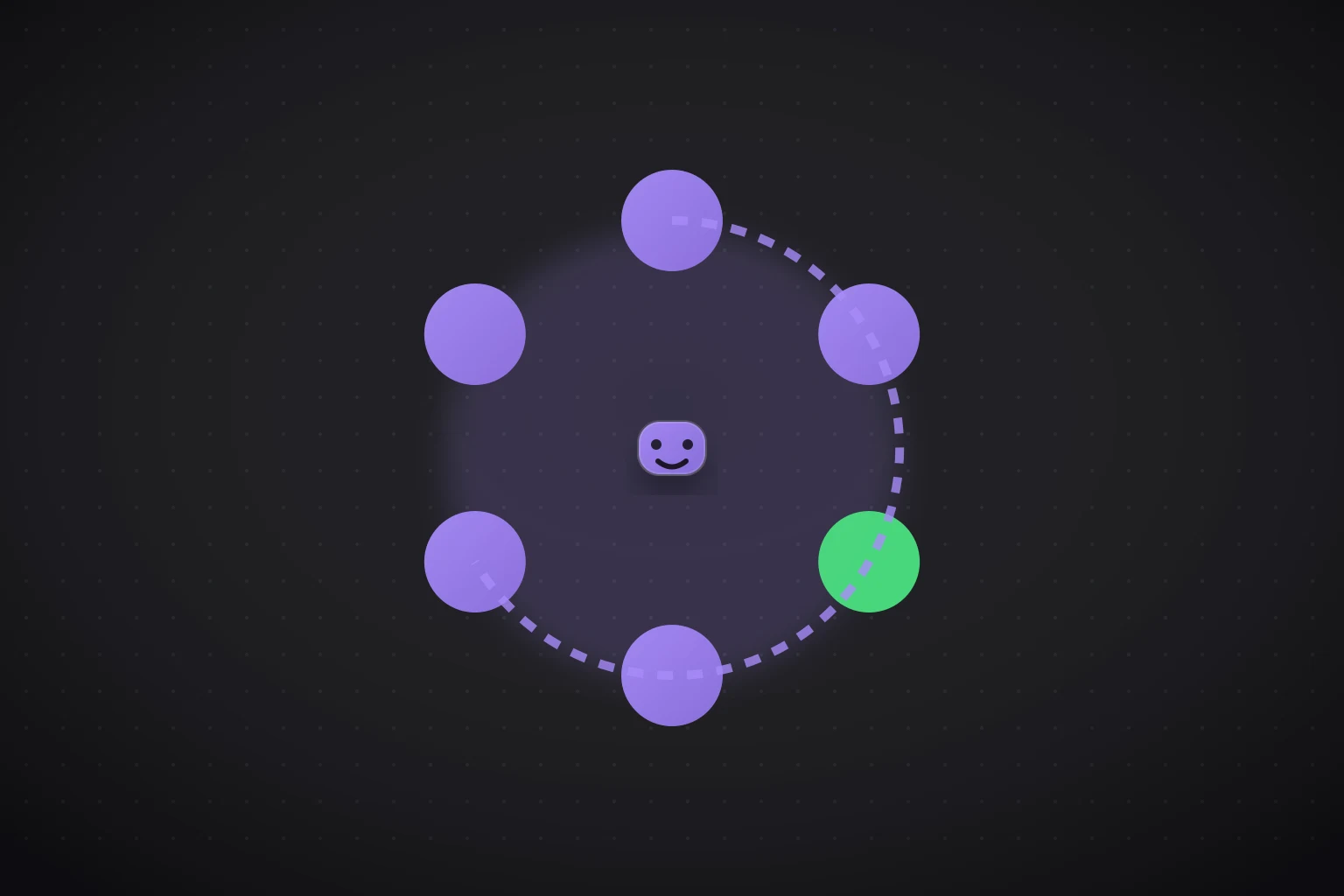
That instinct is the whole course. The six steps form a loop: a rhythm you'll run thousands of times, and the only thing that changes as you improve is how fast it spins.
Walk one lap of it now. Then watch Sam take her first ever turn.
Watch it happen
One lap of the loop: the shape of every coding session you'll ever have.
Six steps, one circle. You'll run this loop thousands of times. Here's a single lap, Sam-speed.
Watch it play out
Sam's first ever conversation with an AI about code. The annotations name which step of the loop each message is.
I'm brand new to coding. This is literally my first day. Can you write me a JavaScript function that converts Celsius to Fahrenheit? Keep it as simple as possible and add comments explaining each line.
Step 1: Describe. Notice what Sam includes: what she wants, that she's a beginner, and that she wants comments. She's shaping the output before a single line exists.
When the AI hands you code, you have two choices. Paste it in, see it run, move on. That feels fine for a while, and quietly builds a pile of code you're afraid of. Or slow down for two minutes and go line by line: what does this do? why is it here? That path builds a developer.
And you have an infinitely patient tutor sitting right there, delighted to explain any line at 11pm without judgement. The understanding is what you're here to collect. The code is just the receipt.
Your turn to run steps four and five. The next evening, Sam describes a tip calculator for splitting restaurant bills. The AI generates the function below in seconds. It looks professional. It has comments. It runs without errors.
And it is wrong: addTip(100, 10) (a £100 bill with a 10% tip) should give 110. Sam got 90. Read it line by line and find out why.
Spot the bug
This AI-generated function runs without errors but gives the wrong answer: addTip(100, 10) returns 90 instead of 110. One line contains the bug. Read every line, then click the culprit.
Click the line you think is wrong.
1function addTip(bill, tipPercent) {2 // Work out the tip: e.g. 10% of 100 is 103 const tip = bill * (tipPercent / 100);4 // Add the tip onto the original bill5 const total = bill - tip;6 // Hand the final amount back7 return total;8}
Predict the response
Bug found. Now for step six: refine. Sam goes back to the AI, but instead of just saying "it's broken", she writes a proper bug report: what she ran, what she expected, what she actually got, plus the code itself. Predict what the AI does.
I ran addTip(100, 10) and got 90, but a £100 bill with a 10% tip should be £110. Here's the function you gave me: [pastes code]. What's gone wrong?
What do you think the AI will do?
The AI generates the code, but you own it. When it breaks at 2am, or in front of a client, "the AI wrote that bit" has never once fixed anything. Reading is how you take ownership; every line you truly understand is a line closer to writing your own.
And around Sam goes: describe the fix, generate, read the new version (only the minus changed? good), run it, test a few bills, done. Twenty minutes for her first working, understood, tested program. Bug included.
Professionals run dozens of laps a day. The loop never changes; it just spins faster and the projects get bigger. Lock the rhythm in:
Drag into order
The six steps of the loop have been shuffled. Drag them into the order Sam ran them.
Grab the handles and drag the steps into the right sequence.
Run
Execute it and see what actually happens
Describe
Say what you want, in plain language
Debug
Work out what's wrong, and why
Generate
The AI writes the code. Seconds
Refine
Go back to the AI with what you learned
Read
Understand every line before it runs
Key takeaways
- where a + should be). Only reading catches that.