 AcademyLv 1 · 0AcademyLv 1 · 0
What is an LLM, really?
12 min · up to 60 XP
The one mental model that explains everything AI does well, and everything it gets wrong.
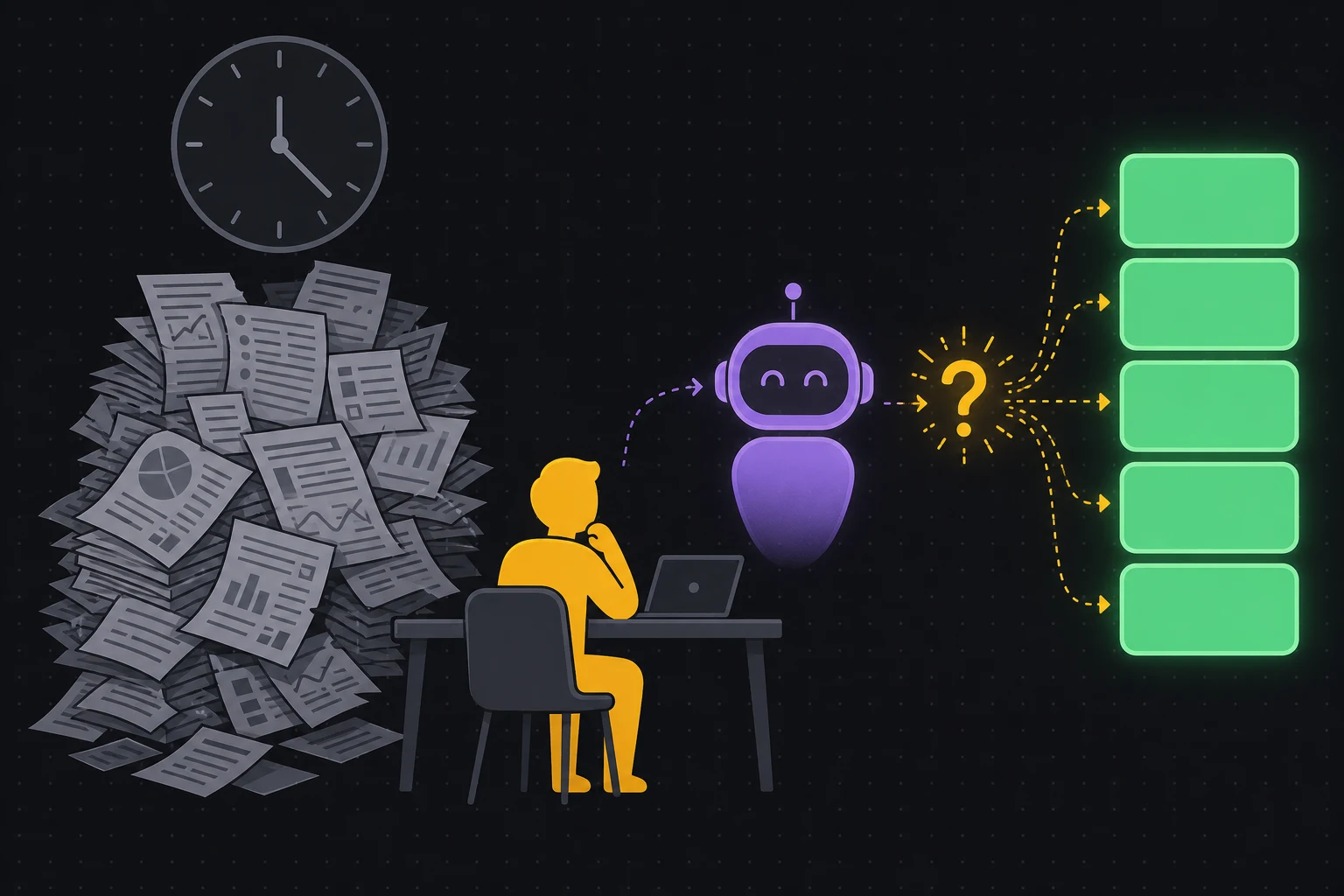
It's 4:55pm on a Tuesday. Priya, a marketing manager, has a board summary due at 5. She types "summarise this report in 5 bullet points" into an AI assistant, pastes the report, and eight seconds later has something better than she'd have written in an hour.
Her first thought: how does it do that? Her second, a week later, after it invented a statistic in front of her CFO: what IS this thing? Below is a working model of the machine. You're the engine now.
The token machine
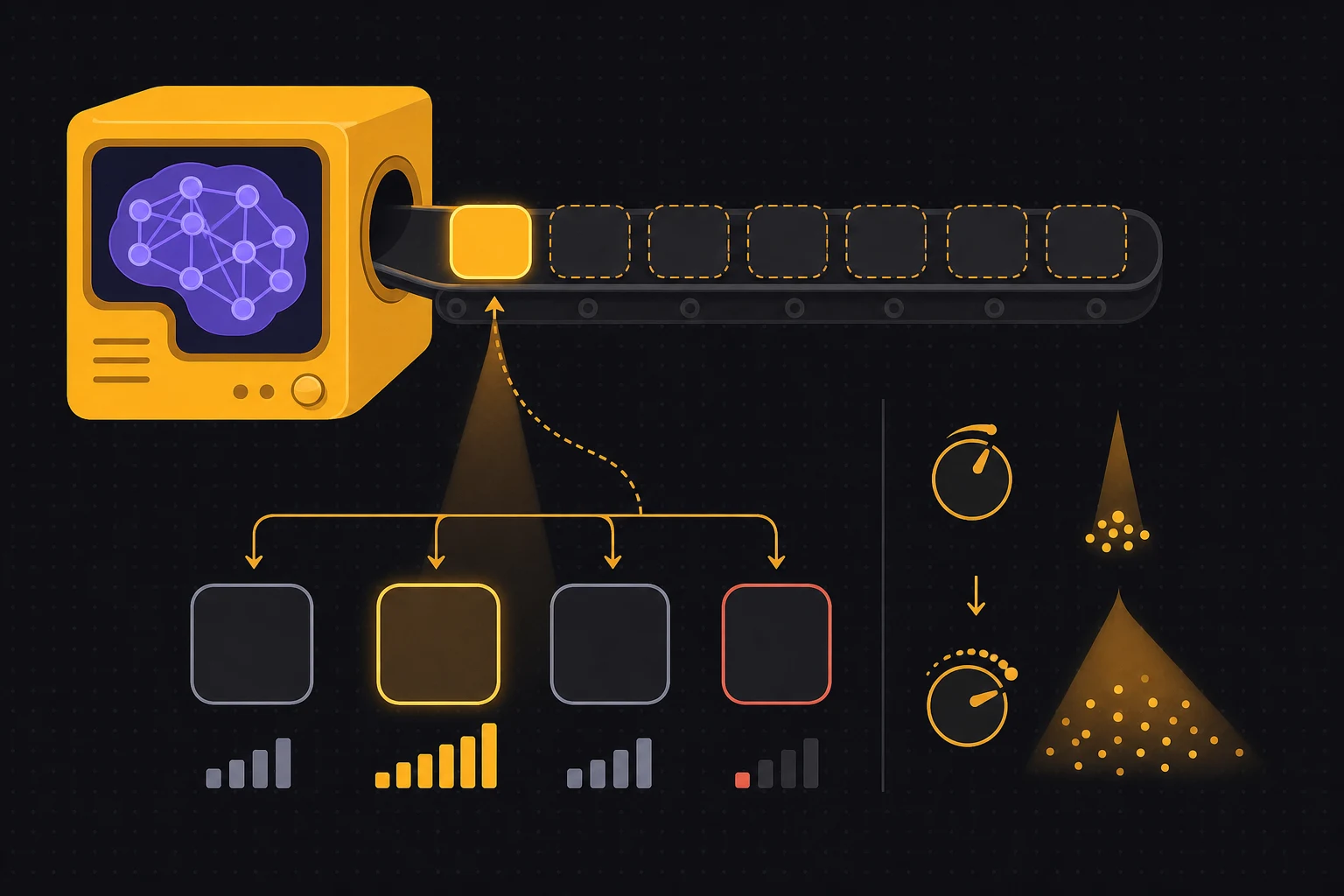
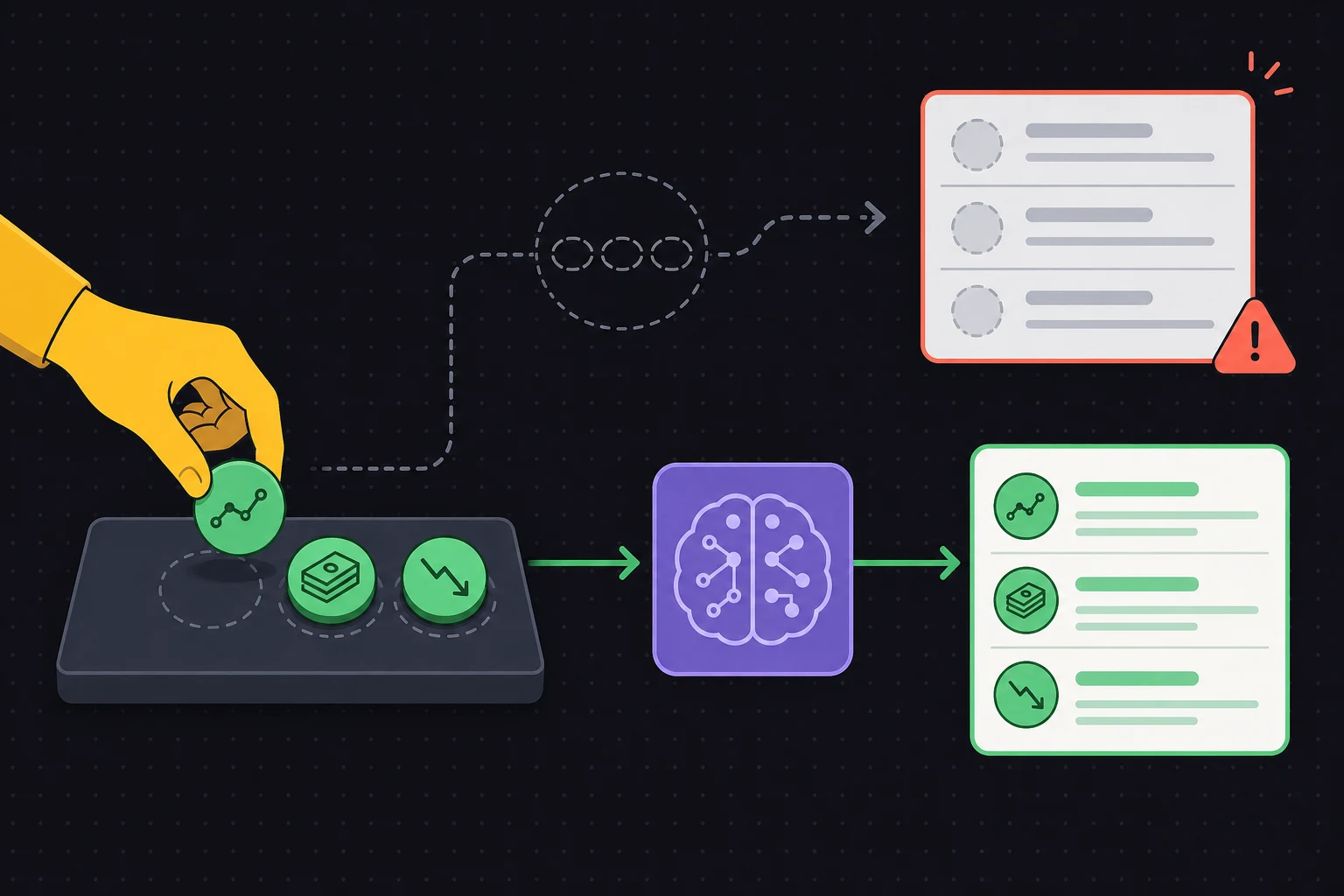
Each round, the model weighs up candidate next words (the bars are its confidence). The temperature dial controls how it chooses: Precise always takes the favourite, Wild gambles on long shots. Generate the whole sentence, then run it again on a different temperature and watch the same machine change personality.
What the model is weighing up next
So what did you just operate? LLM stands for Large Language Model: the machine behind ChatGPT, Claude, Gemini and Copilot. It has read a colossal amount of text (books, articles, websites, code) and learned one skill to superhuman level: predicting what comes next.
You already know a tiny version of this. Your phone keyboard suggests your next word. An LLM is that idea scaled up a billion-fold, so far that prediction starts to look like reasoning, writing, and conversation.

An LLM doesn't know things the way you do. It has absorbed the patterns of everything it read. When the pattern matches reality, it looks like knowledge. When it doesn't, it looks like a very confident lie.
Play with it
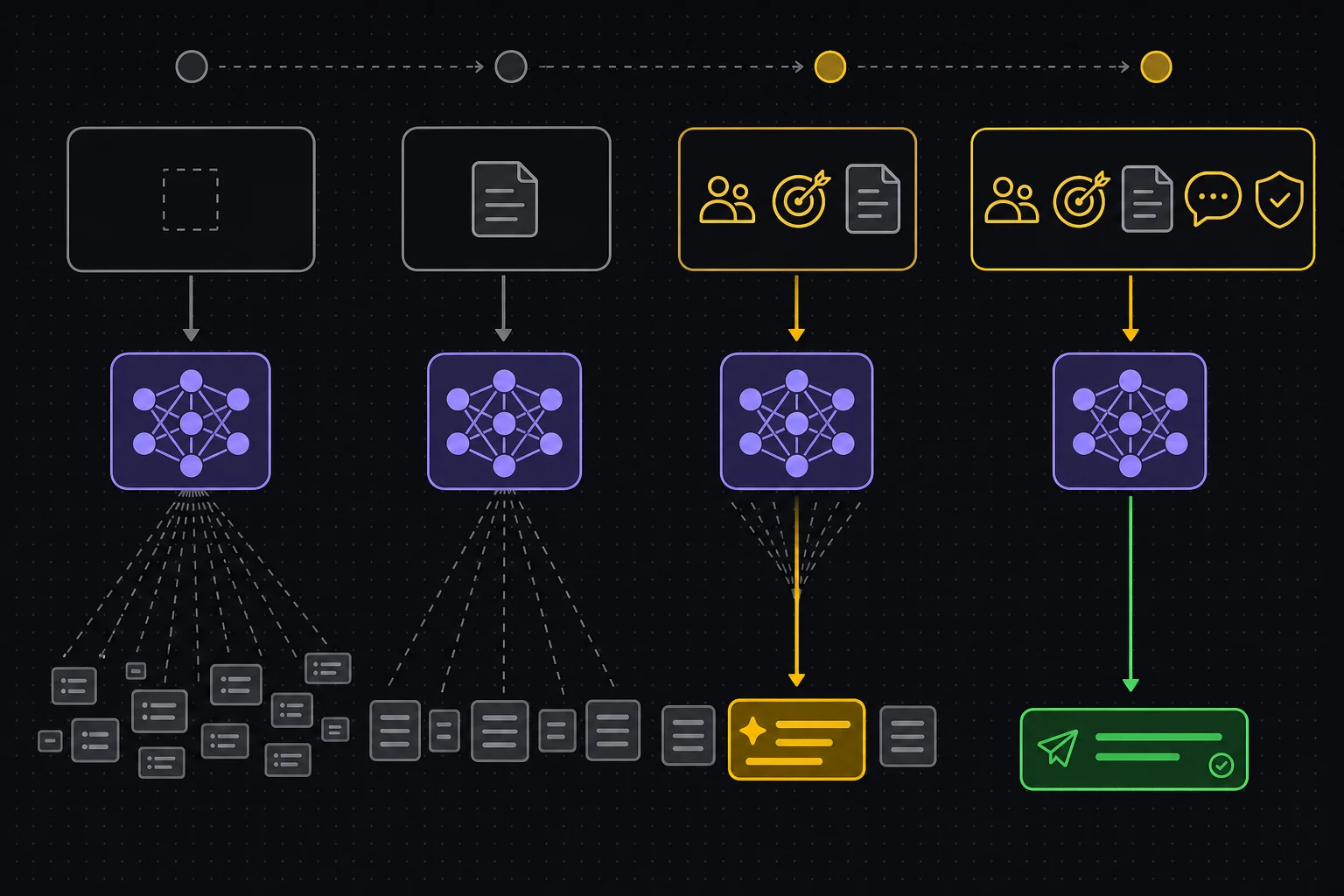
Priya needs an email improved. Drag the slider to give the AI more and more context, and watch what the same model does with each version of her request.
Drag the slider through every setting to see the effect.
Happy to help! Could you share the text you'd like me to improve, and let me know what kind of improvement you're after?
Nothing in, nothing out. The model isn't being difficult; there is literally no text for it to complete against.
Why is a "next-word predictor" so capable? Because to predict text well, the model had to internalise the structures inside text: grammar, logic, arguments, the shape of a good executive summary. And it completes what you started, which is why your input is the biggest lever you have.
One more thing to experience. A real working session isn't one perfect question. It's a conversation. It's the day before the board meeting. This time you're Priya: you choose every message she sends.
You drive the conversation
Steer Priya through prepping her board summary. There's no single right path, but watch how differently the machine behaves depending on what you feed it.
Happy to help with the board summary. Do you want to paste in the Q3 marketing results, or shall I sketch a general structure first?
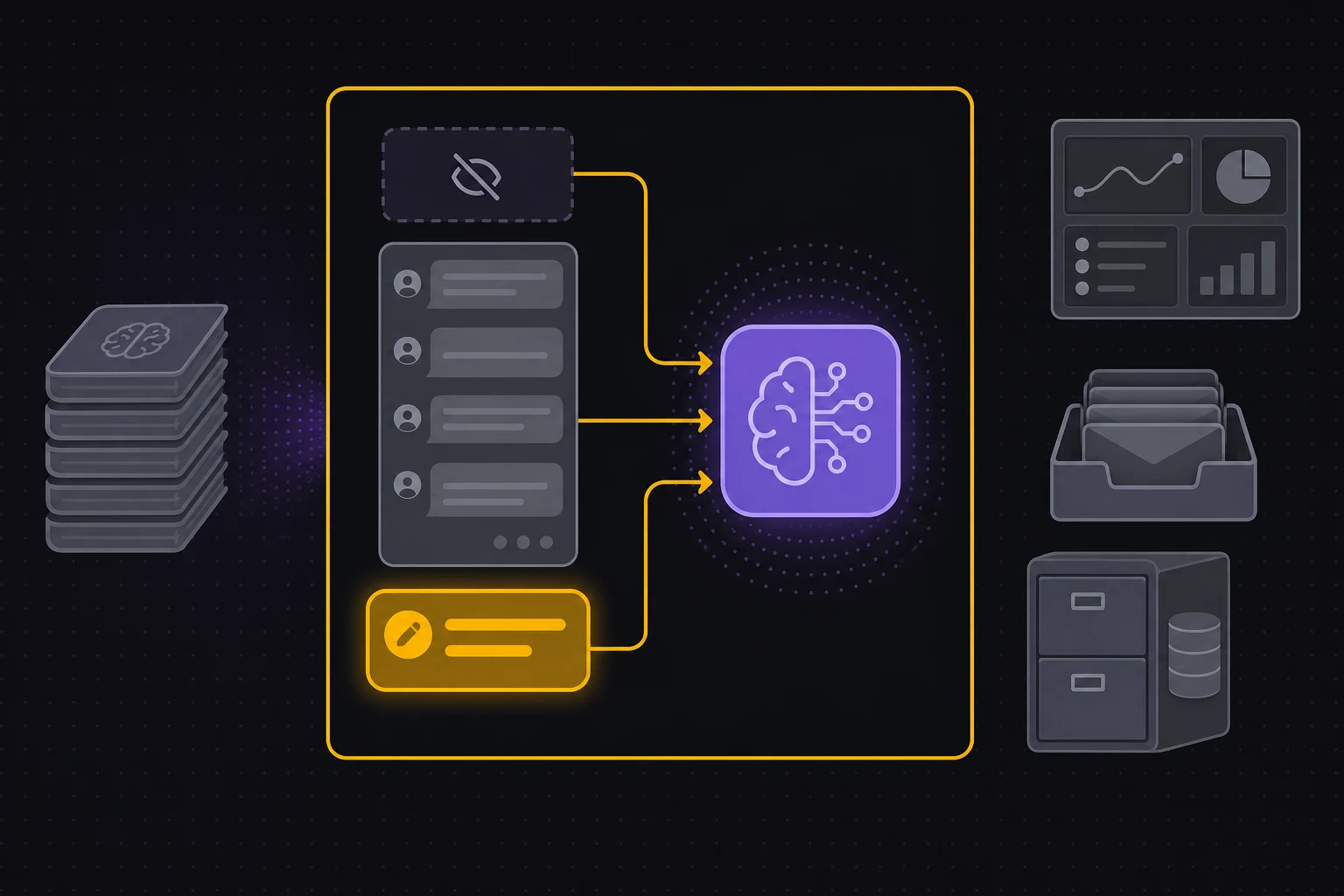
A good model asks for what it can't see. Remember: it has no access to Priya's files, inbox or dashboards.
Your move: what do you say?
Tap the diagram
Last check before the machine is yours. When the model writes its next reply to Priya, tap everything it can actually see.
There's more than one. Tap all of them.
Found 0 of 3
Try this today: take one email or summary you'd normally write by hand and run the context slider experiment for real: ask lazily first, then again with full context and constraints. The gap between the two outputs will teach you more than any article.
Key takeaways